Why I Don’t Believe in Multitasking
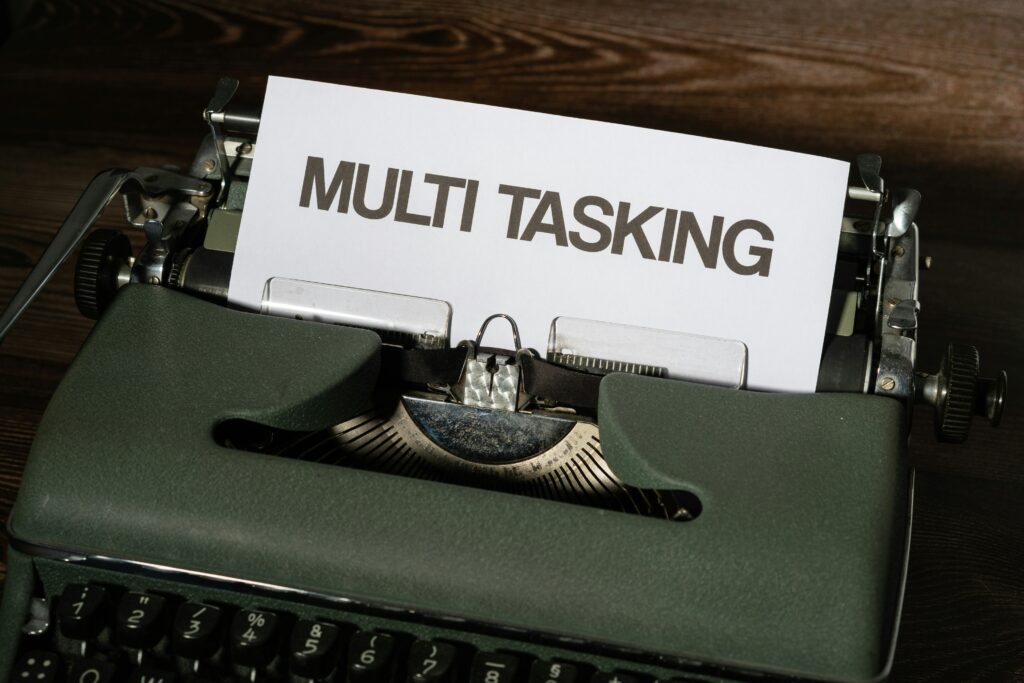
I used to be proud of my ability to Multitask. During my first job, I would answer emails while on conference calls, draft reports while monitoring Slack, and somehow convince myself I was being efficient. Then I missed a critical deadline because I’d been “working on” the same document for three days without actually finishing it. That’s when I realized: Why I Don’t Believe in Multitasking isn’t just a philosophical stance, it’s backed by my catastrophic failure and the science that explains it. The truth hit hard: I wasn’t doing multiple things well, instead I was doing everything poorly.
How Task Switching Destroys Productivity
What we call multitasking is actually rapid task switching, and your brain hates it.
Research from the American Psychological Association confirms that switching between tasks can cost up to 40% of your productive time. Every time you shift focus, your brain needs to:
- Disengage from the current task
- Move attention to the new task
- Reload context and rules
- Overcome “attention residue” from the previous task
For professionals and students juggling multiple responsibilities, this constant switching creates an exhausting cycle of starting without finishing.
Multitasking That Keep Us Stuck
The biggest multitasking myths sound productive but sabotage results:
Myth 1: “I’m getting more done”
You’re starting more, not completing more. Unfinished tasks create mental clutter that drains energy.
Myth 2: “I’m just being efficient”
Efficiency means results per unit of effort. Task switching multiplies effort while diminishing results.
Myth 3: “Some people are good at multitasking”
Cornell research shows that even people who think they’re good at multitasking perform worse than those who focus on single tasks.
I believed all three myths until I tracked my actual output. The numbers were humbling.
Real Focusing vs Multitasking
When I compare my focus vs multitasking days, the difference is stark:
Multitasking days produced:
- 4-5 partially completed tasks
- High stress and decision fatigue
- Work that required extensive revision
- A feeling of busyness without accomplishment
Single-focus days produced:
- 2-3 fully completed, high-quality tasks
- Lower stress and sustained energy
- Work that rarely needed revision
- Genuine satisfaction and forward momentum
Remote workers and students face particular challenges here. Without physical office boundaries, the temptation to “quickly check” something else becomes constant.
Why Multitasking Fails for Productivity and Attention Span
Understanding why multitasking fails changed how I structure my entire workday.
Your attention span isn’t fixed—it’s trainable. But every time you multitask, you’re training yourself to be less focused. You’re literally rewiring your brain for distraction.
The cost compounds:
- Reduced quality: Divided attention produces shallow work
- Increased errors: Mistakes multiply across multiple tasks
- Longer completion times: What should take 2 hours takes 4
- Mental exhaustion: Your brain burns energy on switching, not creating
- Memory problems: Information doesn’t properly encode when attention is split
These aren’t minor inconveniences—they’re career-limiting patterns.
What Changed for Me
Once I embraced single-tasking and deep work principles, everything shifted.
I started blocking 90-minute windows for single tasks. No email, no Slack, no “quick checks.” Just one thing until completion or a natural stopping point.
The results were immediate:
- Projects that used to take days now took hours
- My work quality improved noticeably
- I left work feeling accomplished instead of drained
- Creative solutions emerged because my brain had space to think deeply
Students report similar breakthroughs when they stop studying with their phones nearby or trying to watch lectures while texting.
How to Break the Multitasking Habit
Start small:
- Choose one task for your first 25-minute block
- Remove all distractions (phone, notifications, extra tabs)
- Work until the timer ends or the task completes
- Take a real break before starting the next single task
- Track your progress to see the compound benefits
The first few days feel uncomfortable. Your brain will protest. That’s the addiction to distraction breaking down.
What I Use Now
To maintain single-task focus, I use this small desktop whiteboard to write my current single task in large letters. When distraction tempts, the whiteboard reminds me what actually matters right now.
Related Reads from Optiwire:
And to sharpen your focus, see how a simple desk setup hack doubled my focus time.
For a back-to-basics approach, explore our picks for top analog productivity tools for a digital world.
To cut down on clutter and distractions, check out our guide on top desk drawer organizers for office efficiency.